
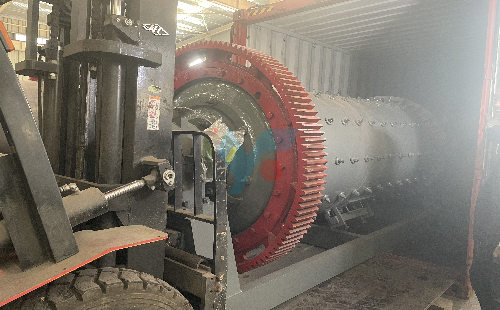
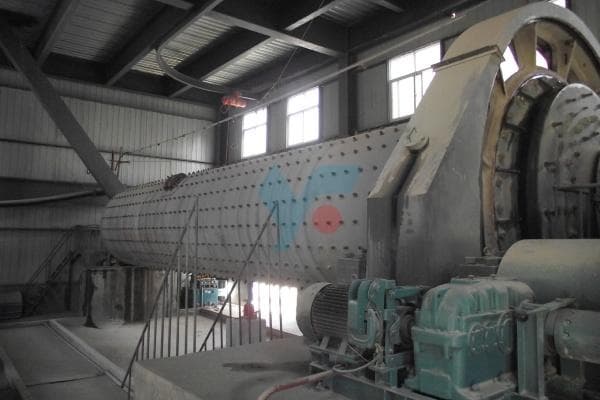
Cement Mill
Description:
The bentonite dryer is specialized thermal equipment designed to reduce the moisture content of bentonite. It is widely used in the foundry industry, metallurgy, drilling mud, the production of cat litter, building materials, the chemical industry and other sectors.
The equipment ensures a fast and uniform bentonite drying process through full contact of hot air with the material, which improves the efficiency of subsequent processing, transportation and storage.
During operation, the hot gas stream contacts the wet material, so that the moisture content is rapidly reduced from the initial 25%–30% to the required 10%–12% of the finished product.
A key feature of the technology is precise temperature control to prevent material damage: bentonite is sensitive to overheating, so the drying temperature is usually strictly controlled below 350 °C to avoid destroying the crystal structure of the mineral.
Structure:
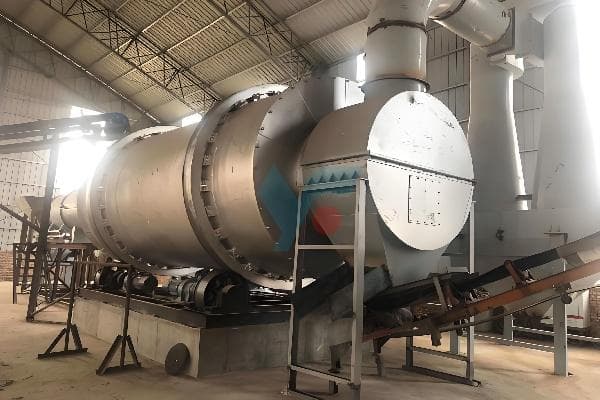
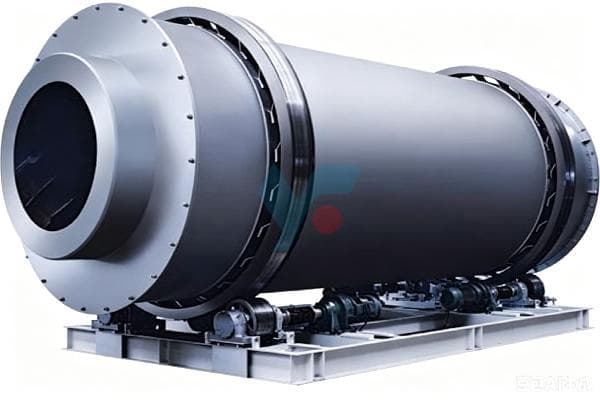
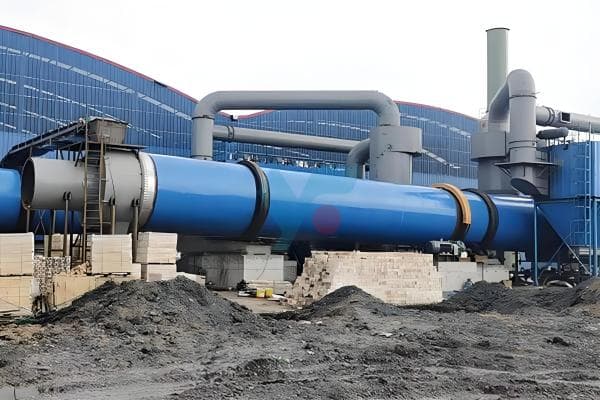
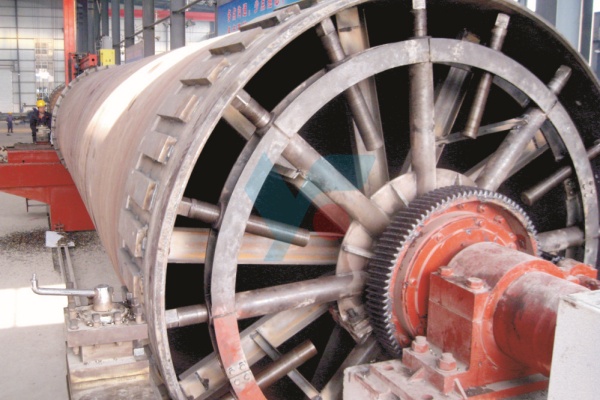
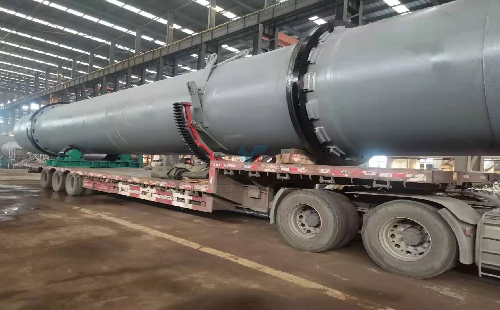
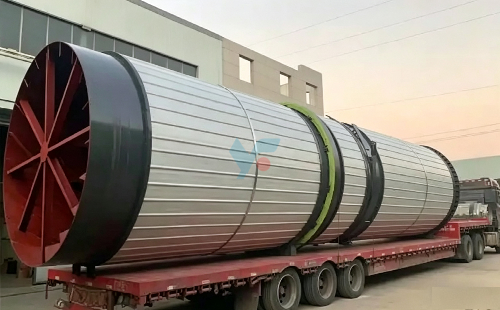
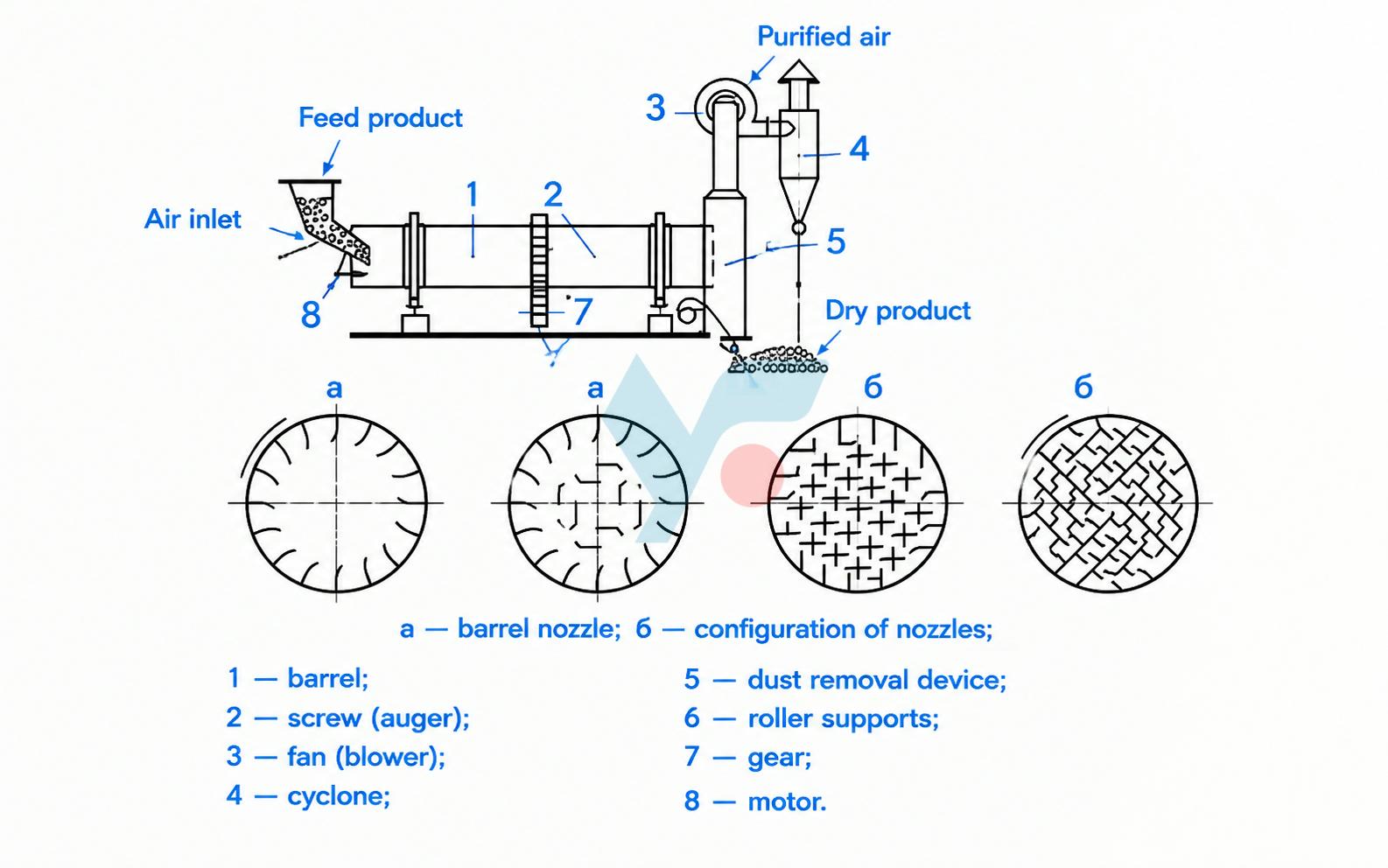
The bentonite rotary dryer mainly consists of a drive device, a support device for the supporting rollers, a thrust device for the supporting rollers, a cylinder, etc.
Advantages:
- Simple design, small footprint, easy to build and repair, economical and convenient.
- Circulating exhaust and rotation of the inner drum ensure fast and uniform drying.
- Large throughput and high thermal efficiency; when drying non-bound moisture, the thermal efficiency can reach 60%.
- High drying intensity: the material is highly dispersed in the gas stream, and the entire surface of the particles is an effective drying area.
- An automatic control device is used: the whole drying process is completed automatically — you only need to set the drying time on the control panel.
Working Principle:
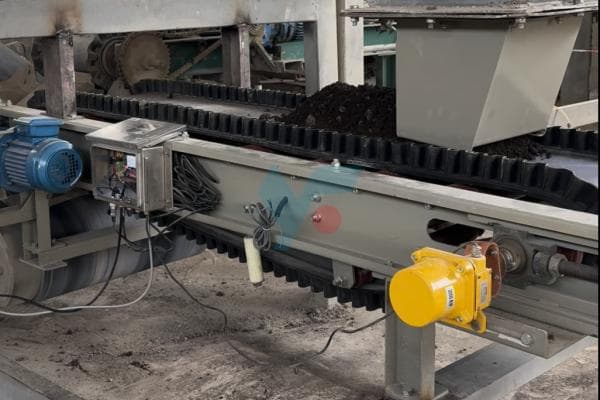
- Bentonite is fed by a belt conveyor or bucket elevator into the hopper, and then through the hopper feeder via the loading pipe enters the loading end of the dryer.
- The inclination angle of the loading pipe must be greater than the natural angle of repose of the material so that the material can flow freely into the mineral-material drying unit.
- The dryer drum is a rotating cylinder installed with a slight inclination to the horizontal. The material is fed in from the higher side, while the heat carrier enters from the low end and moves toward the material (counter-current). It is also possible for the material and the heat carrier to enter the drum simultaneously from one side (co-current). The main ways of contact between the material and the hot air include: counter-current mode (material fed from the upper end, hot air from the lower end); co-current mode (material and hot air fed from the same side). When the co-current drying method is used, the temperature at the dryer outlet is lower and the thermal efficiency is higher.
- As the drum rotates, the material moves toward the lower end under the action of gravity. During the movement of the wet material inside the drum, it receives heat directly or indirectly from the heat carrier, so that the drying process takes place. After that, the dried material is discharged through a belt or screw conveyor.
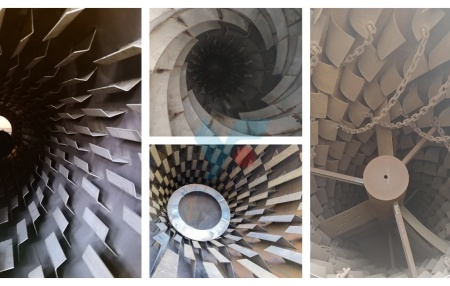
- On the inner wall of the slag-dryer drum, lifting flights are installed, whose task is to raise and scatter the material, increasing the contact area between the material and the hot-air stream. This increases the drying rate and promotes the forward movement of the material. The lifting flights (also called fittings or paddles) usually have a multi-combination design. Their function is not only to raise and disperse the material to increase the heat-exchange area, but also to enhance the cleaning of the already loosened material and improve heat transfer. This makes it possible to eliminate material sticking to the inner walls of the drum and effectively overcome the “air tunnel” effect typical of traditional dryers, ensuring more uniform and efficient heat exchange.
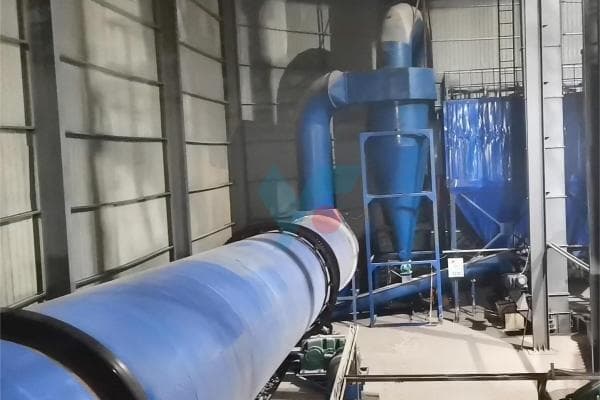
- After passing through the drying unit, the heat carrier (usually hot air or flue gases) is directed into a cyclone dust collector to capture the material particles contained in the gas stream.
During the drying process, it is necessary to control key parameters to ensure drying efficiency and material quality. If the gas velocity in the drying chamber is too low, droplets of material may rise up into the high-temperature zone, leading to a deterioration in product quality. The recommended gas-flow velocity is about 0.5 m/s.
The temperature of the exhaust gases directly affects the temperature of the material, so to regulate it, it is necessary to reduce the temperature of the incoming hot air or increase the volume of sprayed liquid in order to keep the material temperature within the required range.
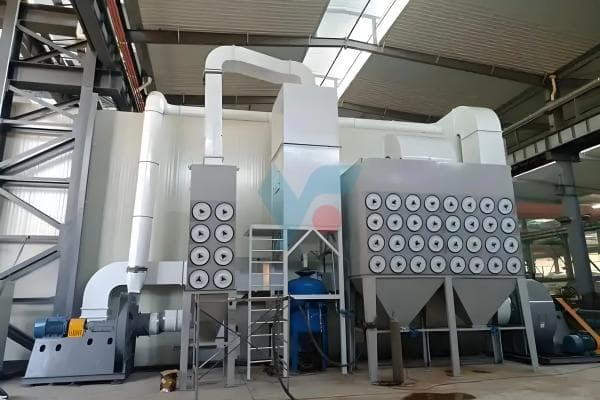
To further reduce the dust content of the exhaust gases before they are released into the atmosphere, it is recommended to use a bag filter or a wet dust collector.
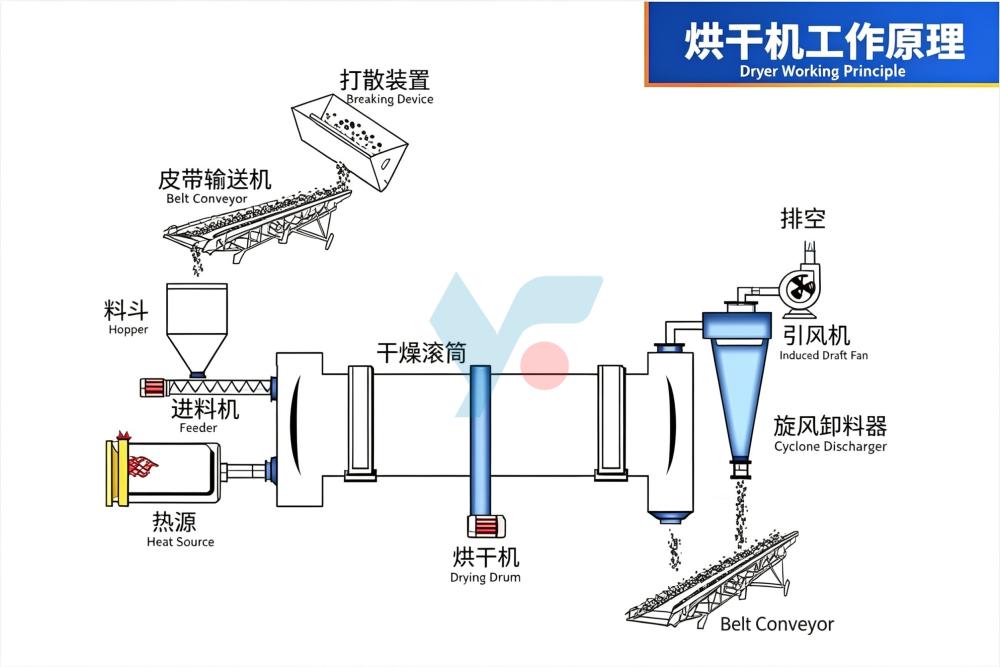
Production-Line Equipment:
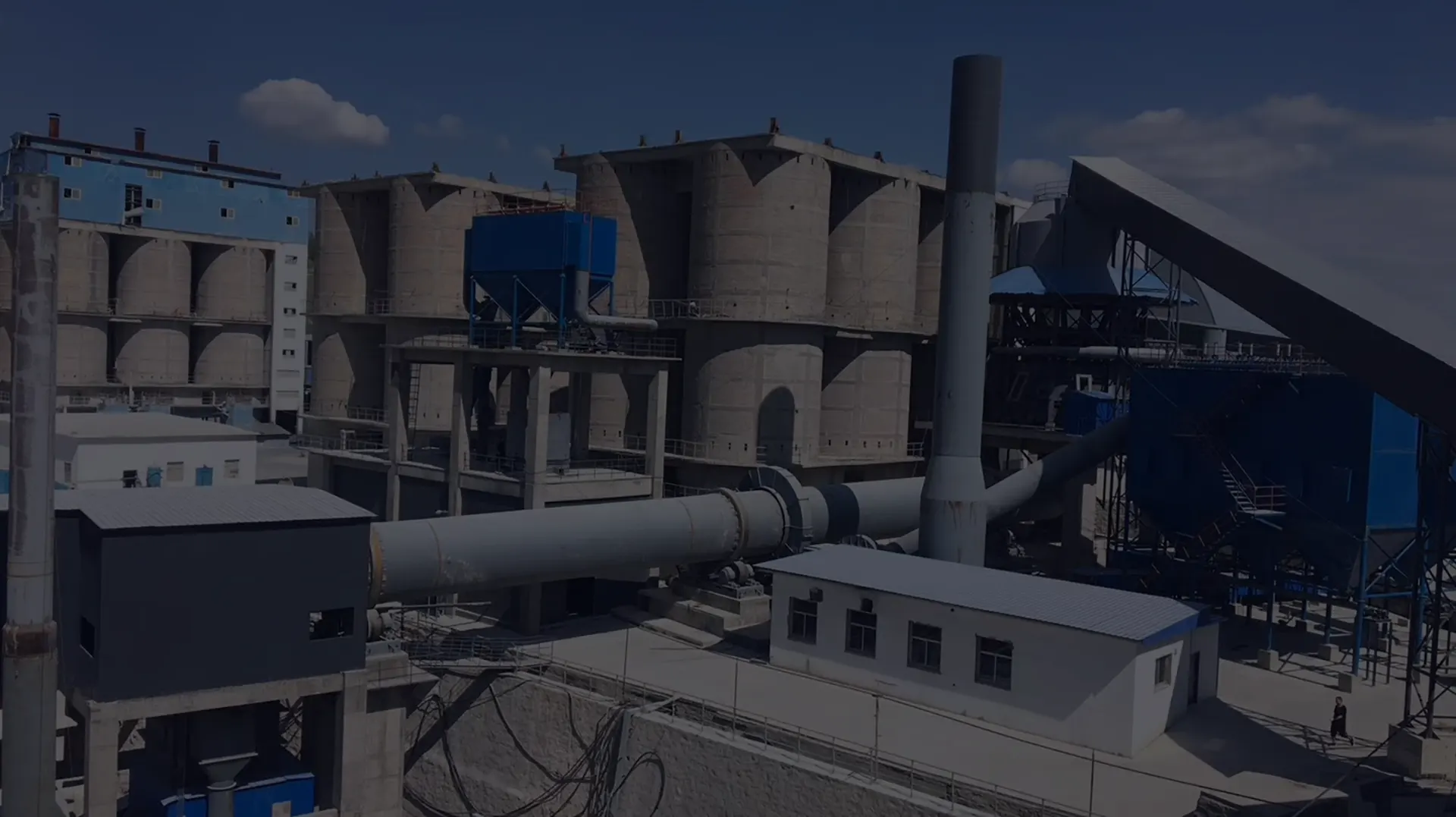
The bentonite drying line mainly consists of the following units and equipment: rotating drum, air-exhaust system, high-speed material-loosening device, lifting flights, self-cleaning system, drive mechanism, conveying equipment, hot-air system, reducer, support devices and sealing elements.
Depending on the user's needs, the production line can also be equipped with bucket elevators, belt conveyors, metering feeders and other conveying equipment, as well as heat-generating devices such as a gas generator and a combustion chamber.
In addition, the exhaust-gas cleaning system usually includes a cyclone dust collector and, if necessary, can be additionally equipped with a bag filter or a wet dust collector.
This production line is an integrated system that combines the listed units and equipment for the efficient drying of bentonite and other materials.