
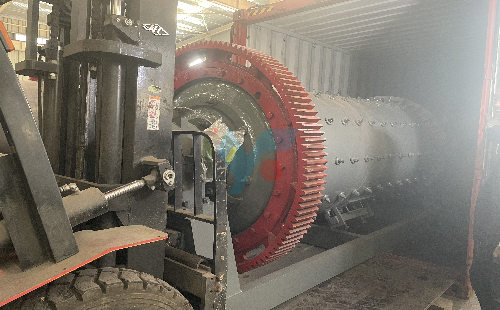
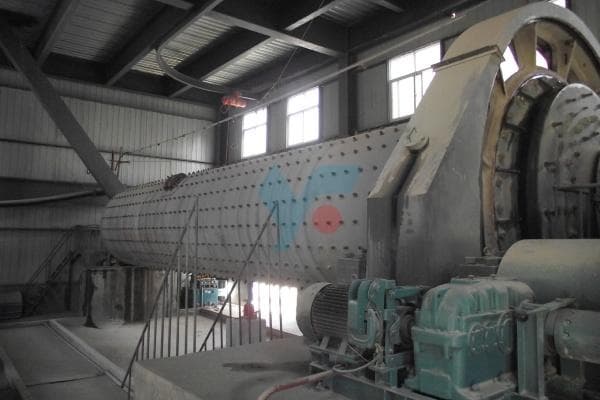
Cement Mill
Description:
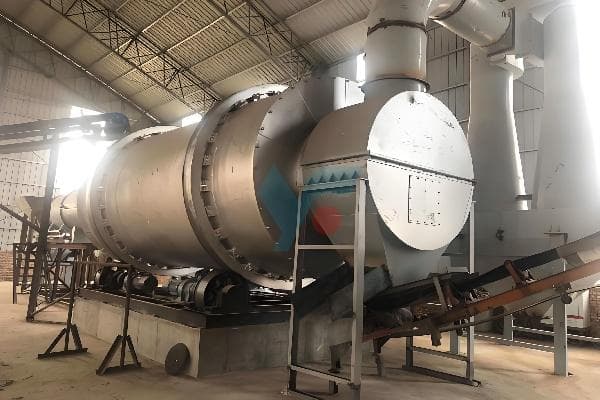
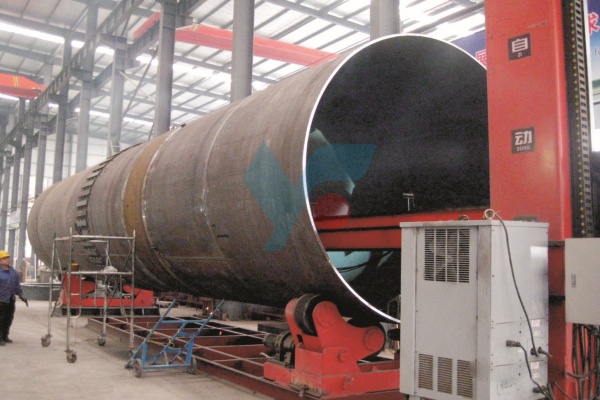
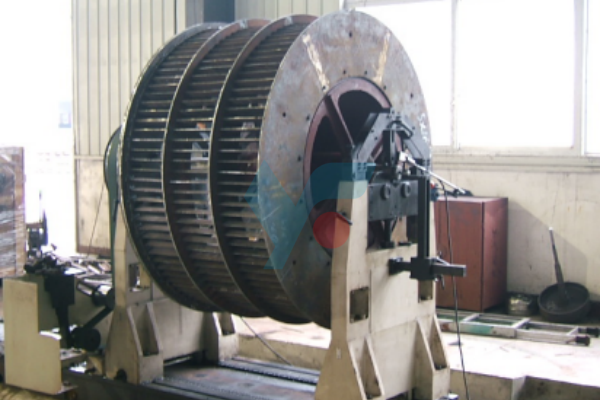
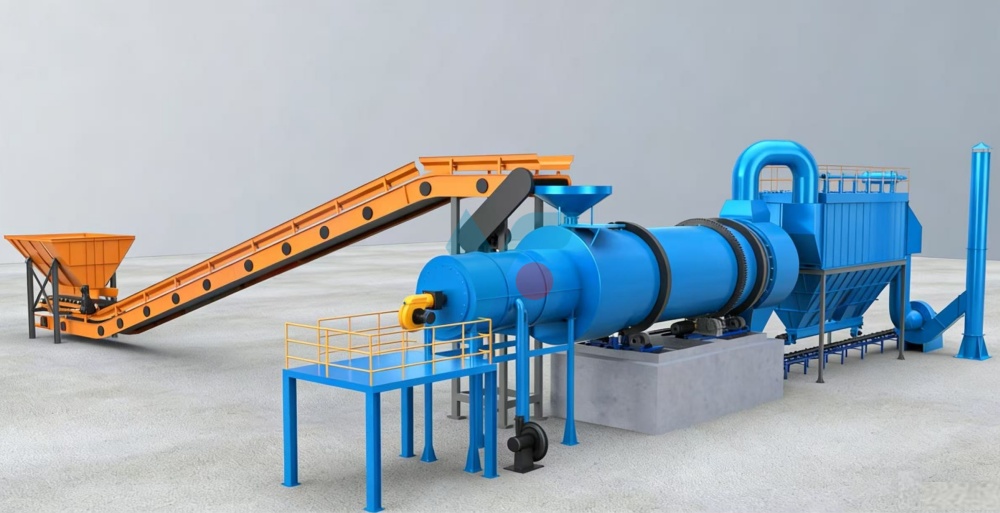
The triple-pass rotary dryer is an upgraded piece of equipment based on the traditional single-drum long rotary dryer. The internal structure of the triple-pass sand dryer includes an inner drum, a middle drum and an outer drum; at the same time, each layer of the triple-pass sand dryer is fitted with lifting plates at different angles and different spacings. Compared with a single-drum dryer, the three-drum dryer shortens the body length and saves floor space. It also performs sealing, moisture-retention and other treatments, which further raises the thermal efficiency of the sand dryer and ensures high efficiency and low energy consumption.
Structure:
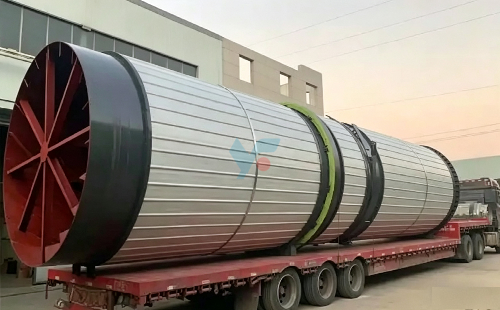
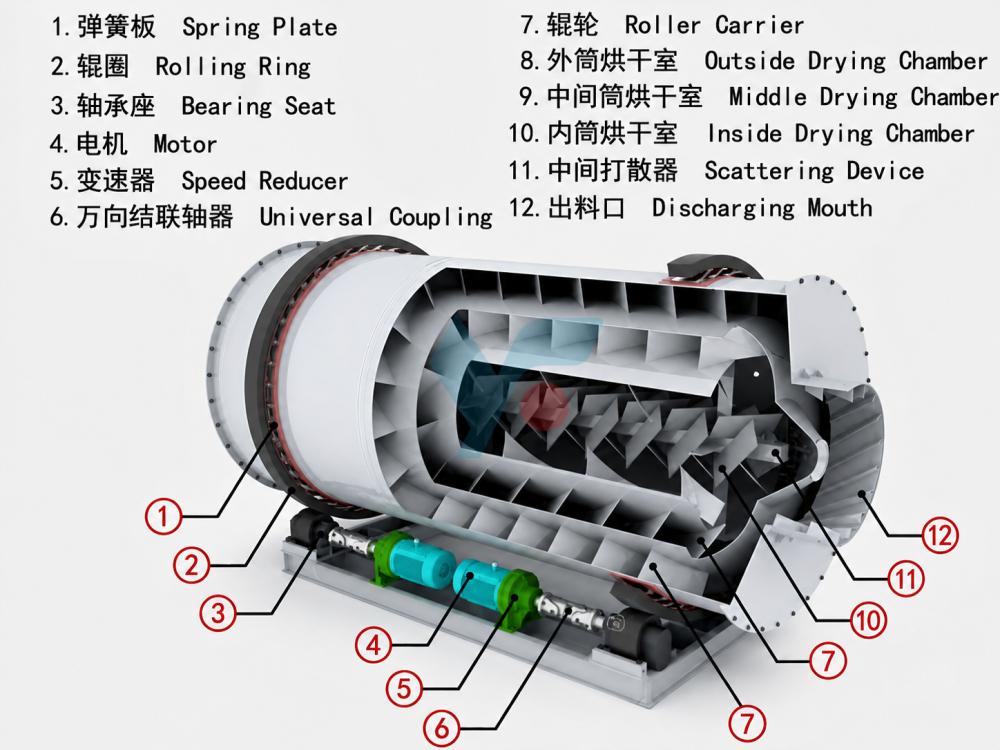
The triple-drum (triple-pass) dryer is an improved design of the single-drum dryer, in which one drum is replaced by three drums nested inside one another, which makes it possible to significantly reduce the overall dimensions of the equipment.
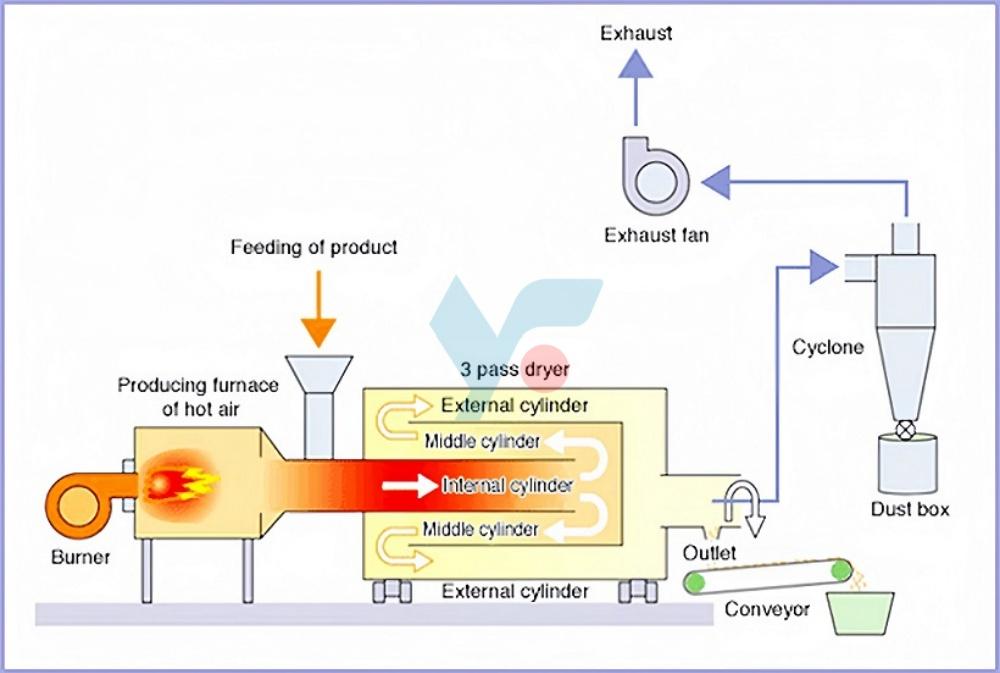
During operation, the material and the hot air flow pass successively through the inner, middle and outer drums. After repeated Z-shaped movement inside the dryer, the material fully uses the thermal energy, is effectively dried and is then discharged.
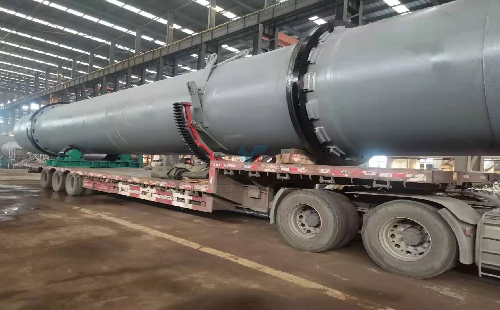
The drum part of the dryer consists of three coaxially arranged horizontal drums — inner, middle and outer — nested inside one another. Such a design ensures the most efficient use of the drum cross-section. The total body length is approximately 30–35% of the length of a traditional single-drum dryer of similar capacity, which significantly reduces the occupied area and lowers the size of the production premises.
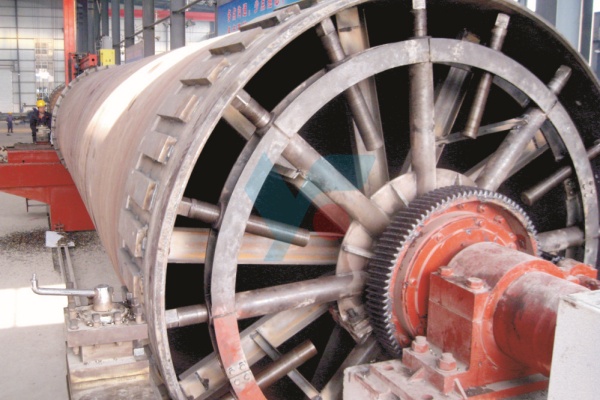
The support system of the equipment is made using a riding ring and support rollers mounted on the outer drum. The drive is provided by an electric motor that directly rotates the support rollers. The drum is set in rotation through the friction between the rollers and the riding ring.
The overall design of the equipment is compact, rational and simple. For ease of maintenance and replacement of wear parts, the middle part of the body is made as a longitudinal split connection with bolted fixing.
Working Principle:
The material enters the inner layer of the rotating drum from the feeding device for subsequent drying. The material is continuously picked up and scattered under the action of the lifting plate on the inner layer to achieve the purpose of heat exchange. The material moves to the other end of the inner layer and enters the middle layer for counter-current drying. The material is repeatedly lifted in the middle layer and moves two steps forward and one step back. The material in the middle layer not only fully absorbs the heat radiated by the inner roller, but also absorbs the heat of the middle roller, achieving the purpose of saving energy consumption while extending the drying time. Here the material reaches the best drying state. The material moves to the other end of the middle layer and falls into the outer layer. The material moves along a rectangular multi-circuit principle in the outer drum. The material that has reached the drying effect moves quickly and is discharged from the drum under the action of hot air. Wet material that has not reached the drying effect cannot be discharged quickly because of its own weight. During movement, the materials are fully dried on this rectangular lifting plate, thereby achieving the final purpose of drying.
Equipment Advantages:
- 1. Compact construction
The shortened body length reduces the occupied area. Additional sealing and thermal-insulation measures significantly increase the thermal efficiency of the dryer, ensuring high energy efficiency. - 2. Low final moisture
The final moisture of the material can be reduced to less than 0.5%, which makes the equipment the optimal choice for dry-mix mortar and ready-mix mortar production lines. - 3. High thermal efficiency
Thanks to the self-insulation of the drum, the thermal efficiency reaches more than 70%, with no heat loss and no cold-air infiltration. - 4. Wide adaptation to fuel types
Coal, fuel oil, gas and electricity can be used as fuel. The equipment is suitable for drying lump, granular and powdery materials up to 20 mm in size. - 5. Low capital and operating costs
Compared with a single-drum dryer: the occupied area is reduced by about 50%; civil-works costs are reduced by about 50%; energy consumption is reduced by about 60%. - 6. Low temperature of the finished material
The temperature of the discharged material is less than 60℃, which is convenient for subsequent transport and packaging.