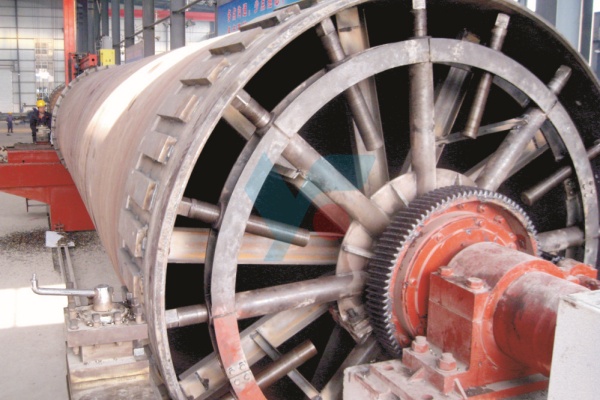

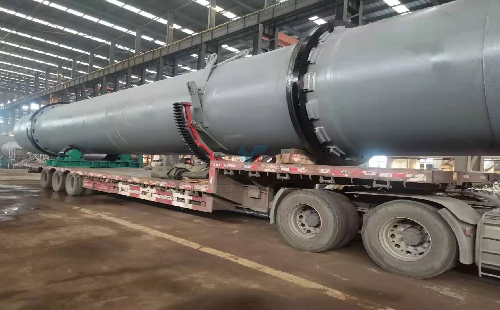
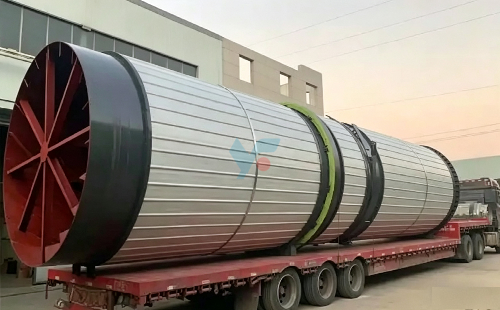
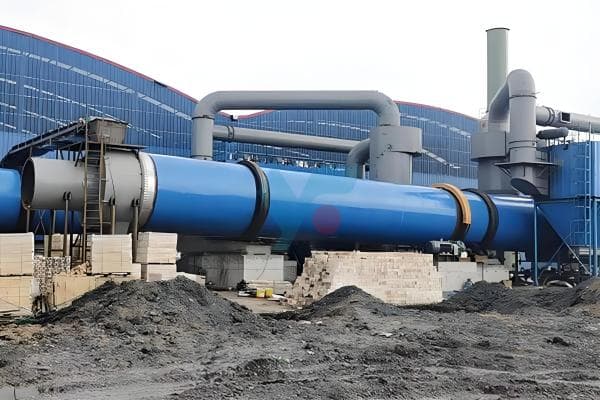
Slag Rotary Dryer
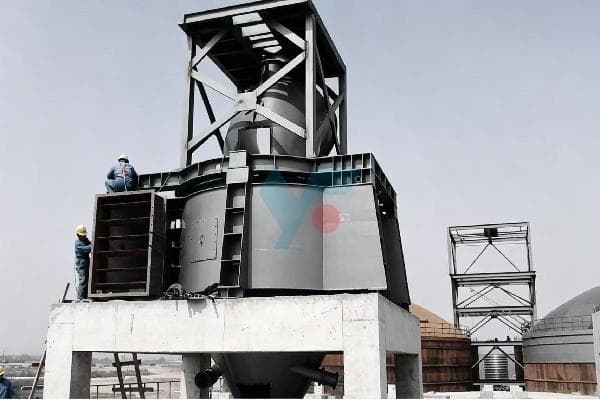
The combined classifier for artificial sand production is a combination of a three-stage separation classifier and a V-shaped static classifier.
It allows the material to be separated into four fractions of different particle sizes (sand and powder), which satisfies various market requirements and has gained wide recognition among users.
Operating principle
After passing through the crusher, the sand-making machine and the vibrating screen, the material is formed into artificial sand of the 0–4.75 mm fraction. Then, with the help of conveying equipment, it is fed into the inlet nozzle of this machine and enters the loosening zone.
In the loosening zone, under the action of several groups of guide plates and impact plates, particles of different sizes acquire different speeds as they fall, and repeated relative friction occurs between them, as a result of which clay and stone dust particles separate from the surface of the sand. Under the action of the air flow, the dust is quickly carried away, ensuring effective cleaning of the sand.
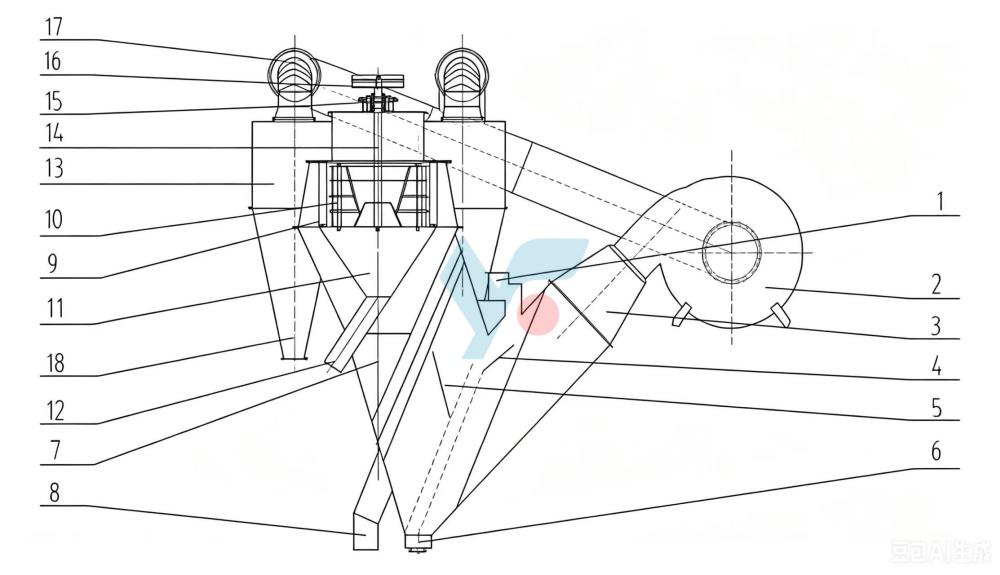
The material entering through the inlet (1) passes through the multi-stage loosening plates (4), where loosening and separation of particles take place. Between the plates, the air flow supplied from the left blows the medium and fine fractions out of the material flow, while the coarse sand is discharged through the lower coarse-fraction outlet (6).
The material in the suspended state, together with the air flow, enters the classification zone, where it passes through the multilayer classification plates (5). Here, larger particles are additionally removed from the air flow: they slide down along the plates and are then picked up again by the air flow, which ensures repeated separation. The coarse powder is combined with the coarse sand.
After passing the zone of classification plates, the air-material flow enters the medium-fraction classification zone. In this zone, due to the reduction of the flow speed and the change of its direction, gravitational settling of particles occurs as well as their deposition upon impact against the walls of the apparatus. The medium sand is discharged through the medium-fraction outlet (8).
Next, the flow enters the fine-fraction classification zone. Here, under the action of the arc-shaped guide plates (9), a rotational motion arises, simultaneously forming centrifugal and gravitational settling. The fine sand settles into the lower conical collector (11) and is discharged through the fine-fraction outlet (12).
The powdery material, together with the air flow, enters the dust removal zone. Under the action of the cage rotor (10), larger particles (fine sand) are thrown off, collide with the arc-shaped guides and return to the fine-sand collection cone.
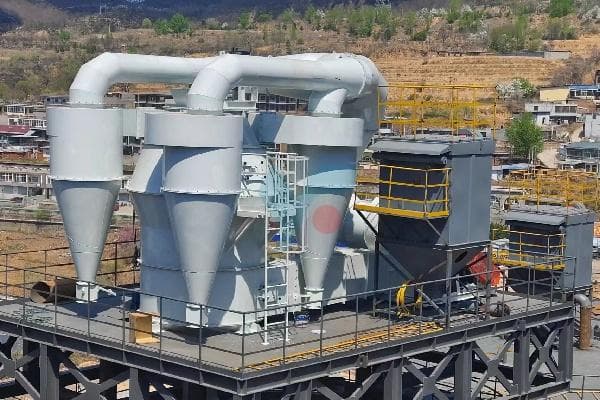
The dust-air mixture enters the cyclone separator for the separation of the solid and gas phases: the separated fine powder is discharged through the powder outlet (18); the purified air through the air duct (17) enters the fan and is returned to the system for reuse.
Advantages
- Stable classification principle.
The equipment is equipped with a multi-level classification system. Taking into account the characteristics of sand-and-gravel materials, the method of aerodynamic analysis of air flows is applied to optimize the structure of the material flow. This makes it possible to significantly reduce the aerodynamic resistance of the equipment, increase the separation efficiency and substantially reduce energy consumption and operating costs. It surpasses the traditional water-washing sand technology. - Simple design of the V-shaped loosening and classification zone.
Simple design, minimal consumption of wear materials, no electric loosening device, low pressure losses, stable operation and low energy consumption. - High classification accuracy.
In the rectifier, the air flow relative to the rotor moves only upward without swirling. The material in the separation zone is repeatedly cleaned, which ensures high classification accuracy. - Ease of operation.
The cage rotor is equipped with a stepless speed control system using a frequency converter: wide adjustment range, ease of setting, high sensitivity and reliability. - High classification efficiency.
The V-shaped loosening and separation zone is equipped with multi-level loosening and classification plates. Thanks to repeated loosening and blowing, the discharged coarse fraction contains practically no fine particles; in the settling zone, the air flow additionally removes fine particles from the medium fraction; the content of fine particles in the medium fraction is significantly reduced. Additionally, the guide plates in the cage-rotor zone increase the accuracy and efficiency of classification. - High wear resistance and long service life.
The main wear elements are made of imported wear-resistant steel, which significantly increases the service life of the equipment. The entire machine undergoes dynamic balancing and operates stably across the whole speed range. - Improved bearing sealing system.
The lower bearing of the main shaft is equipped with a new sealing system, which effectively solves the problem of dust ingress and the problem of lubricating oil leakage. This significantly increases the service life of the bearings. - Anti-vibration base design.
The design of the base uses the principle of mechanical damping. The vibration frequency of the base does not coincide with the natural frequency of the separator in a multiple ratio, which completely eliminates the resonance problem. - Reduction of air leaks.
The pipelines of the coarse, medium-coarse and fine sand are equipped with double airlock valves, which significantly reduces air infiltration and eliminates the problem of increased dust formation. - Environmental friendliness of the system.
The system uses double airlock valves and internal air circulation. This makes it possible to reduce air leaks, lower dust emissions and reduce environmental pollution.